 By Dr 'Timi | Bishop & Mentor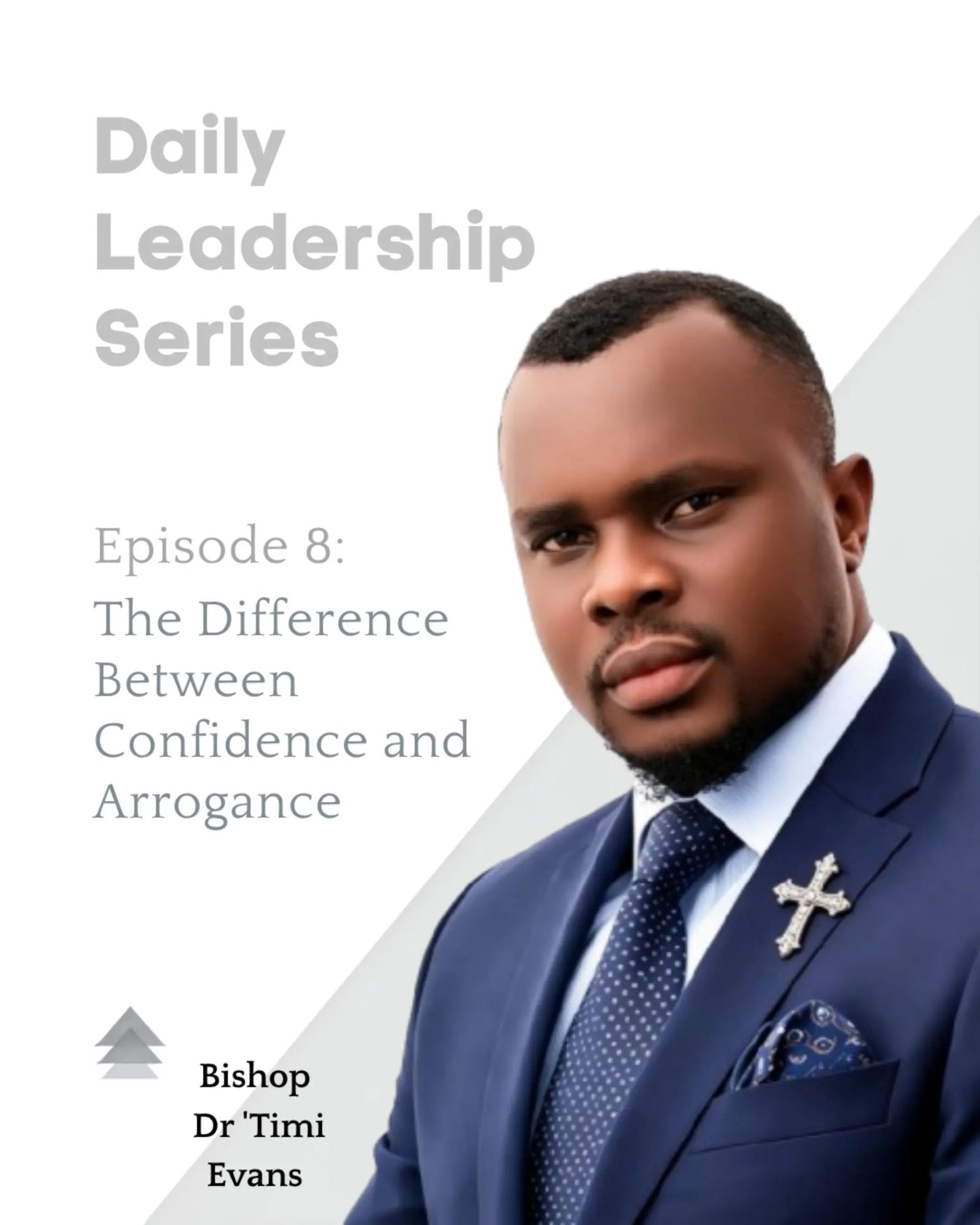

Daily Leadership Series
Episode 8: The Difference Between Confidence and Arrogance
Why Does Genuine Confidence Produce Humility While Insecurity Often Produces Pride?
One of the greatest misconceptions in leadership is that confidence and arrogance are close relatives.
They are not.
In fact, they often arise from opposite psychological conditions.
Psychologists distinguish between secure self-confidence and defensive self-enhancement. Secure confidence is rooted in competence, self-awareness, and emotional stability. It does not require constant recognition because it is internally anchored.
Arrogance, however, is frequently a compensation for insecurity. When people are uncertain of their worth, they often construct an exaggerated image of themselves to gain admiration and conceal their fears. The louder the need to prove superiority, the greater the possibility that insecurity lies beneath it.
This explains why truly confident people are often calm. They listen more than they speak. They can admit mistakes without feeling diminished. They celebrate the success of others because another person’s achievement does not threaten their identity.
Arrogant people behave differently.
They constantly compare.
They struggle to receive correction.
They crave recognition.
They mistake disagreement for disrespect.
Their identity depends upon appearing superior rather than becoming wiser.
The ancient philosopher Socrates famously declared, “The only true wisdom is in knowing you know nothing.” His statement was not an admission of ignorance but a recognition that intellectual humility is the beginning of genuine learning.
Scripture presents the same principle.
Moses is described as one of the humblest men on earth, yet he confronted Pharaoh, led a nation, and delivered God’s law. His humility did not weaken his leadership—it strengthened it. His confidence rested not in self-promotion but in his calling.
In contrast, King Nebuchadnezzar allowed pride to distort his perception of reality. He attributed his greatness entirely to himself, forgetting that power is ultimately entrusted, not possessed. His downfall began long before his kingdom was shaken; it began when admiration replaced gratitude.
The strongest leaders do not need to remind people of their importance.
Their character speaks before they do.
Confidence says, “I know who I am.”
Arrogance says, “I need everyone else to know who I am.”
One inspires trust.
The other demands attention.
Leadership is never measured by how loudly you project your importance.
It is measured by how securely you carry your responsibility.
Reflection
When your opinions are challenged, what is your first response to understand or to defend?
Is your confidence rooted in your character, or does it depend on the admiration of others?